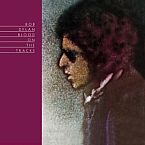
This is a very personal song for Dylan. In an oblique narrative, it deals with the changes he was going through, including his marriage falling apart. A predominant theme is trying to escape the past.
Dylan wrote this in the summer of 1974 at a farm he had just bought in Minnesota. He had been touring with The Band earlier that year.
Blood On The Tracks was Dylan's first album under his new contract with Columbia Records. He left the label a year earlier to record for David Geffen's label, Asylum Records.
This was influenced by the art classes Dylan was taking with Norman Raeben, a popular teacher in New York. Dylan credits Raeben for making him look at things from a nonlinear perspective, which was reflected in his songs.
Dylan sometimes introduced this on stage by saying it took "Ten years to live and two years to write."
First recorded in New York with producer Phil Ramone, Dylan delayed the release and re-recorded it in Minnesota while visiting his brother, David, for the holidays. David organized the sessions and helped produce the version that went on the album.
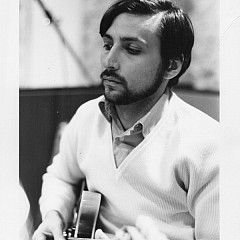
At the Minnesota sessions, the key was changed from G to A at the suggestion of Kevin Odegard, a local singer and guitarist who was brought in to play with Dylan.
Odegard told Artful Living about his contribution to "Tangled Up in Blue."
"The second night, December 30," Odegard said, "we started with 'Tangled Up In Blue.' It was an OK song in G. After we recorded it, we sat there for a minute. Bob lit a cigarette, turned to me and asked, 'What'd you think?' I could tell he felt like something was missing.
By this time, I was comfortable, just like the guys on the steps of the armory. So I turned to him and said, 'It's passable.' He said, 'Passable? What do you mean passable?' And I said, 'Well, I think it would great if we all pitched up a key, from G to A. I think it would have more power, more urgency, more tension.' He looked down for a minute, and my heart kind of stopped. Finally he said, 'Let's try it.'"
From there, the rest is history. Odegard was not credited on Blood On The Tracks, but he credits the experience with launching his successful career in music.
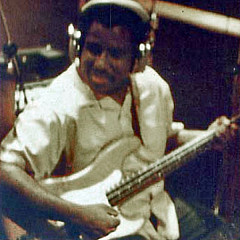
Among the musicians who recorded this in Minnesota were Billy Peterson, who became the bass player for Steve Miller, and Bill Berg, who became an animator for Disney. Some of the films Berg has worked on include Beauty And The Beast, The Little Mermaid, and Hercules.
Dylan's brother, David, came up with the idea for the hi-hat cymbals at the beginning.
The 1994 Hootie & the Blowfish song "
Only Wanna Be With You" mentions this song in the lines:
Yeah I'm tangled up and blue
I only wanna be with youThe song is a tribute to Dylan, but borrowed a bit too liberally from his work, incorporating some lines from "Idiot Wind" as well. Dylan took legal action and received a settlement.
Dylan and his first wife, Sara Lowndes, divorced in 1977. As part of the settlement, she got half the royalties from the songs Dylan wrote while they were married, including this one.
The session musicians in Minnesota were not credited on the album because the packaging had already been printed.
Regarding the lyrics, "I lived with them on Montague Street, In a basement down the stairs," Montague Street is in a nice area in Brooklyn, where there was a music venue called Capulet's, where Dylan would sometimes hang out. Montague is also Romeo's last name in Shakespeare's Romeo And Juliet.
When Dylan performs this song in concert he uses the third person perspective (He and She) that is on the version found on The Bootleg Series Vol 1-3 album instead of the first person perspective that is on Blood On The Tracks. He also alters some of the lyrics, for instance: "One day the axe just fell" is changed to "One day it all went to hell."
The book
Simple Twist Of Fate by Andy Gill and Kevin Odegard, documents the recording of
Blood On The Tracks (in particular the genesis of this song). It explains how two different sets of musicians were used in New York and Minnesota but the Minnesota musicians not only did not receive credit, but also have never received royalties. Obviously, they are not happy about this since the album has sold millions of copies.
>>
Suggestion credit:
Brian - Massapequa Park, NY
Dylan mentions the titles of two Beatles songs in the lyrics: "Pouring off of every page like it was written in my soul,
From Me to You," and "There was music in the cafes at night and
Revolution in the air." Dylan and The Beatles shared a great deal of mutual admiration.
>>
Suggestion credit:
Chris - Newcastle Upon Tyne, United Kingdom
Dylan on Blood on the Tracks: "A lot of people tell me they enjoy that album. It's hard for me to relate to that. I mean, it, you know, people enjoying the type of pain, you know?"
Polyphonic observes that the music is made to mirror the lyrical content. "The nature of these lyrics are reflected in the rolling chord progression that drives the song. Behind the first half of the verse, we have two chords repeating, the second of which retains the root of the first. In this way the music is symbolizing the play with time, too. Just as the past is even there when we're looking into the present, so is the root of the first chord when we're playing the second. At the end of the verse, when we find ourselves in a more certain present day with a determined course, the music shifts into a more definitive chord progression."