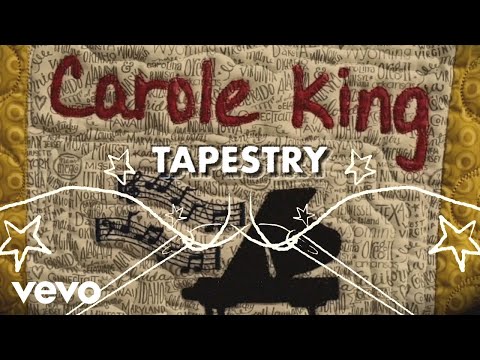
Tapestry

Album: Tapestry (1971)
Play Video

Songfacts®:

  • Lou Adler, who owned King's record company Ode Records, produced the Tapestry album, taking care not to overproduce it. In a 1972 recorded conversation with Adler, Carole King said of this song: "It is typical of the magic that seems to surround that album, a magic for which I feel no personal responsibility, but just sort of happened, that I had started a needlepoint tapestry a few months before we did the album, and I happened to write a song called 'Tapestry,' not even connecting the two up in my mind. I was just thinking about some other kind of tapestry, the kind that hangs and is all woven, or something, and I wrote that song. And, you being the sharp fellow you are, (giggles), put the two together and came up with an excellent title, a whole concept for the album."
  • Tapestry was a groundbreaking album, which helped popularize the singer/songwriter genre. It stayed on the American album charts for over six years, selling over 24 million copies worldwide. Until 1976, it was the largest-selling album ever, and until March 29, 1980 when Dark Side of the Moon marked its 303rd week on the Billboard album charts, it had the longest stay on the Billboard Top 200. Tapestry won 1971 Grammys for Album of the Year and Best Pop Vocal Performance. >>
    Suggestion credit:
    Bertrand - Paris, France
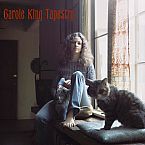
  • The photograph on the album sleeve featuring Carole King seated on a window sill was taken at her California home. She recalled to The Daily Telegraph April 22, 2009: "This really was my living room in Laurel Canyon. These were my old Indian print curtains and my cat, Telemachus."
  • The R&B group All-4-One recorded this for the 1995 album Tapestry Revisited: A Tribute to Carole King.

Comments: 4

  • Jeff from Baton Rouge, LaCarole King's "Tapestry" is my favorite song from her 1971 album of the same name. The song weaves together (no pun intended) a variety of themes into a cohesive, unifying commentary on life (and, I think, death).

    She acknowledges that her life has been one of colorful variety but ultimately something she cannot hold onto. The second verse introduces an anonymous wanderer, someone whom she doesn't know, but all the same, she feels compassion and empathy, as this traveler suffers life's disappointments, misfortunes, and setbacks.

    In the last verse, she emphasizes the sudden appearance of a phantom ("a figure gray and ghostly beneath a flowing beard") and recognizes it as one who has visited her in her own despair and depression ("in times of deepest darkness, I've seen him dressed in black"). Yet she has managed to fend him off and reweave her life, metaphorically speaking.

    However, life is transient, ephemeral, as she initially acknowledges. At the end of it is death, which reclaims and transports her back to whatever transcendent plane we originated from ("now my tapestry's unraveling; he's come to take me back.")
  • Kawa from Tokyo, JapanHi Music fans,

    I know that a millions listeners like this album and that it's a great one,too.
    But I was wondering that Why Carole had changed her musical style so suddenly after breaking up her band 'The City' in 1969 and started her new solo career with an album 'Writer' in 1970.
    The City's albim sounds like music based on pop-jazz a bit but album 'Writer' sounds like very pop music.
    I wonder Why! The City's album was released in 1969 and album 'Writer' was released in 1970. So those facks led me to this conclusion!
    Something had happened to her between 1969 and 1970.
    I think what happened to her during the times changed her musical style and made 'Writer' AND 'Tapestry' and big hit and made her famous.
    And the rest is history!


    To be continued.
  • Dan from Greenwood, ScMy take on this song is that the events she describes are part of the tapestry of all of our lives and the fact that it is always moving from one event another. Sometimes we are uncertain of the events ("He moved with some uncertainty"), other time we fail ("once he reached for something golden, hanging from a tree,and his hand came down empty"). Just when we despair of getting better, someone or something comes along and we pick up the strands of our life and start weaving again. This song has encouraged me over the years...nothing is hopeless and our lives keep moving along.
  • Ted from Phoenix, Az"Tapestry" is both the name of the album and the name of one of the songs on it. The song "Tapestry" has some very strange lyrics--the narrator sings about weaving a tapestry that becomes unwoven, and then it is somehow saved by a "he" who has come to take "her" back.
see more comments

Editor's Picks

Intentionally Atrocious

Intentionally AtrociousSong Writing

A selection of songs made to be terrible - some clearly achieved that goal.

Philip Cody

Philip CodySongwriter Interviews

A talented lyricist, Philip helped revive Neil Sedaka's career with the words to "Laughter In The Rain" and "Bad Blood."
Jesus Thinks You're a Jerk: Rock vs. Televangelists

Jesus Thinks You're a Jerk: Rock vs. TelevangelistsSong Writing

When televangelists like Jimmy Swaggart took on rockers like Ozzy Osbourne and Metallica, the rockers retaliated. Bono could even be seen mocking the preachers.
Part of Their World: The Stories and Songs of 13 Disney Princesses

Part of Their World: The Stories and Songs of 13 Disney PrincessesSong Writing

From "Some Day My Prince Will Come" to "Let It Go" - how Disney princess songs (and the women who sing them) have evolved.

The Truth Is Out There: A History of Alien Songs

The Truth Is Out There: A History of Alien SongsSong Writing

The trail runs from flying saucer songs in the '50s, through Bowie, blink-182 and Katy Perry.

Roger McGuinn of The Byrds

Roger McGuinn of The ByrdsSongwriter Interviews

Roger reveals the songwriting formula Clive Davis told him, and if "Eight Miles High" is really about drugs.