Let Me Ride

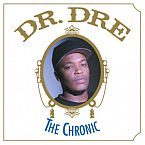
Album: The Chronic (1992)
Charted: 31 34
Play Video

Songfacts®:

  • "Let Me Ride" is based on the 1975 Parliament song "Mothership Connection," which provides the hook:

    Swing down, sweet chariot
    Stop, and let me ride


    Which is rooted in "Swing Low, Sweet Chariot," a traditional gospel song that dates back to the 1800s, when slaves in the American South would sing:

    Swing low, sweet chariot
    Coming for to carry me home


    Parliament, one of George Clinton's groups under his P-Funk umbrella, put the song in orbit, with the chariot becoming the Mothership, a vehicle for transcendence. Dr. Dre brings it back to Earth in his reworking, but it's a similar vibe: freedom of body and mind.
  • Most hip-hop beatmakers of the '80s used dance and soul music for their samples, with James Brown a particular favorite. Dr. Dre and other West Coast producers mined a different vein: '70s funk, especially Parliament, Funkadelic, and other P-Funk offshoots. Starting with these more viscous grooves, they created slower, smoothed-out tracks suitable for MCs who were more storytellers than speed rappers. Along the way, they introduced a new generation to P-Funk. Dr. Dre took every opportunity to pay tribute, and in the video for "Let Me Ride," included footage of a P-Funk concert from the 1970 with the Mothership landing.
  • This song pays tribute to lowrider culture, riding around in big cars tricked out with hydraulics to make them bounce - Dr. Dre raps that his has "16 switches." But unlike the most famous song about this scene, the peaceful "Low Rider" by War, "Let Me Ride" is straight gangsta. Dre has his TEC-9 ready with hollow-point bullets, ready to blast anyone who gets in his way.
  • This was the third single from The Chronic, Dr. Dre's debut solo album. With his previous group, N.W.A, Dre broke through sonic and cultural boundaries to expand the audience for hardcore rap. He made another leap forward with The Chronic, an album so popular it pushed into the suburbs, terrifying the soccer moms whose kids devoured it. Released in December 1992, the first single, "Nuthin' But A G Thang," climbed all the way to #2 in March 1993, followed by "Dre Day," which hit #8 in July. "Let Me Ride" was the third and final single, pulling in at #34 in October.
  • That's Snoop Dogg (known at the time as Snoop Doggy Dogg) with the line "Rollin' in my six-four," in the break, a reference to a 1964 Chevy Impala. Snoop had a larger role in the first two Chronic singles, which is where most listeners heard him for the first time. Around the same time "Let Me Ride" was released as a single, Snoop got in an altercation that nearly derailed his extremely promising career. On August 25, 1993, he and his bodyguard exchanged threats with a rival. They rolled up on him in Snoop's Jeep, and the bodyguard stood up in the vehicle and shot him. Snoop drove off but turned himself in a week later. He was up on murder charges and out on bail when his debut album, Doggystyle (produced by Dr. Dre) was released in November 1993. With help from lawyer Johnnie Cochran, he and his bodyguard both beat the charges, finally getting the verdict in February 1996.
  • Dr. Dre directed his own videos at the time. In "Let Me Ride," he starts it with a skit where contestants compete on the "$20 Sack Pyramid." We then see Dre at home watching the show. He gets a call from one of his boys and heads out, to the dismay of the two girls he has hanging around.

    As the song plays, Dre and his crew ride around Los Angeles in their lowriders. Ice Cube, who was with Dre in N.W.A, makes a cameo, saying "Damn right it was a good day," a reference to his track "It Was a Good Day," released a few months earlier. His appearance served notice that any beef between the two rappers was settled.
  • "Let Me Ride" earned Dr. Dre his first Grammy when it won for Best Rap Solo Performance at the ceremony in 1994. He was back on the podium in 2001 after producing Eminem's The Marshall Mathers LP, which won Best Rap Album and earned Dre the award for Producer Of The Year.

Comments

Be the first to comment...

Editor's Picks

Emmylou Harris

Emmylou HarrisSongwriter Interviews

She thinks of herself as a "song interpreter," but back in the '80s another country star convinced Emmylou to take a crack at songwriting.
Rob Halford of Judas Priest

Rob Halford of Judas PriestSongwriter Interviews

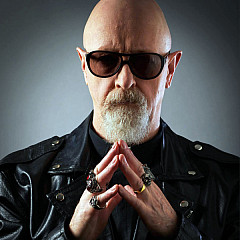
Rob Halford dives into some of his Judas Priest lyrics, talking about his most personal songs and the message behind "You've Got Another Thing Comin'."

Charlotte Caffey of The Go-Go's

Charlotte Caffey of The Go-Go'sSongwriter Interviews

Charlotte was established in the LA punk scene when a freaky girl named Belinda approached her wearing a garbage bag.

Gentle Giant

Gentle GiantSongwriter Interviews

An interview with Ray and Derek Shulman of the progressive rock band Gentle Giant to discuss counterpoint, polyrhythms, and... Bon Jovi.

Jason Newsted (ex-Metallica)

Jason Newsted (ex-Metallica)Songwriter Interviews

The former Metallica bassist talks about his first time writing a song with James Hetfield, and how a hand-me-down iPad has changed his songwriting.
Daniel Lanois

Daniel LanoisSongwriter Interviews

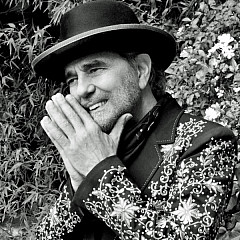
Daniel Lanois on his album Heavy Sun, and the inside stories of songs he produced for U2, Peter Gabriel, and Bob Dylan.