
Starlings

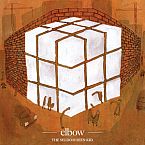
Album: The Seldom Seen Kid (2008)
Play Video

Songfacts®:

  • Frontman Guy Garvey told popmatters.com the story of this song. Said Garvey: "We had just that for a long, long time, and originally the words over it were a poem about my first girlfriend. It was called 'Whenever I See a Crimson 105.' And it was okay. It might have made an entertaining B-side. It wasn't brilliant. I certainly didn't think it was album strength, you know?"

    "So then I changed the lyrics completely. I wrote the 'how dare the premier' thing. I would say that all the words to that song were written in an hour, which is great for me because it usually takes months for me. And I was so vibing on it and I got to the 'darling is this love?' line and I thought, 'You can't say this!' It is quite cliché really: you can't say that, and that is where we came up with the horn blasts. Quite often we will have a sound in our heads, but we don't know what it is going to be and you go looking for that sound."

    "It was one of those things where the benefits of being together with the same people for eighteen years is you have a language that nobody else could understand. I went back in and continued to work on the lyrics and when I came back into the room and they had it working. I had a moment of feeling very, very proud at the speed and accuracy of our communication for that song. We knew it was something special at that point, I think."

    "Every time we played it from the top, we would pace around the room and try to act like somebody wasn't expecting that horn blast. And then every time the horn blasts, we would piss ourselves laughing because it is such an audacious opening move. It was a lot louder than that. We had to temper it a little bit because it was forcing the boys to turn it down in the car. You don't want people skipping a tune."
  • Garvey told the Manchester Evening News that this song was his attempt to write about a character like Count Arthur Strong, the self-important thespian normally heard on a BBC Radio 4 sitcom. He explained: "He's a guy who thinks he's far more important than he actually is, a little pompous. I suppose he's an exaggeration of an area of my own character that I'm very wary of: a little bit of that I have to keep in check. He's this overblown, slightly older figure, who considers himself a cut above the others. But he's absolutely lost for words in the presence of beauty, in this case a waitress."

Comments

Be the first to comment...

Editor's Picks

How "A Rolling Stone Gathers No Moss" Became Rock's Top Proverb

How "A Rolling Stone Gathers No Moss" Became Rock's Top ProverbSong Writing

How a country weeper and a blues number made "rolling stone" the most popular phrase in rock.

Rick Astley

Rick AstleySongwriter Interviews

Rick Astley on "Never Gonna Give You Up," "Cry For Help," and his remarkable resurgence that gave him another #1 UK album.
Second Wind Songs

Second Wind SongsSong Writing

Some songs get a second life when they find a new audience through a movie, commercial, TV show, or even the Internet.

Christopher Cross

Christopher CrossSongwriter Interviews

The man who created Yacht Rock with "Sailing" wrote one of his biggest hits while on acid.

Paul Stanley of Kiss, Soul Station

Paul Stanley of Kiss, Soul StationSongwriter Interviews

Paul Stanley on his soul music project, the Kiss songs with the biggest soul influence, and the non-make-up era of the band.
Best Band Logos

Best Band LogosSong Writing

Queen, Phish and The Stones are among our picks for the best band logos. Here are their histories and a design analysis from an expert.