Mystery Train

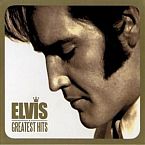
Album: Greatest Hits (1955)
Charted: 25
Play Video

Songfacts®:

  • "Mystery Train" was written and originally recorded by Junior Parker in 1953 for Sam Phillips' Sun Records (Phillips gets a co-writing credit). Parker was a renowned Blues musician from Memphis who is best known for this song. He was known more for his singing than for his guitar playing, and never achieved the popularity of players like Buddy Guy and B.B. King. Parker was just 39 when he died in 1971 of a brain tumor.
  • Elvis Presley recorded the most famous version of this song, also on Sun Records, in 1955. His version was ranked #77 on Rolling Stone's 500 Greatest Songs of All Time, and is his best-known song that was never a hit - it was released as the B-side of "I Forgot To Remember To Forget." Other artists to cover the song include Bruce Springsteen, Paul Simon, Ricky Nelson, Tom Fogerty, and The Doors.
  • Neil Young's 1983 version on his album Everybody's Rockin' has an interesting story behind it. After all, there's never a short story behind a Neil Young song!
    Young came to cover "Mystery Train" by way of performing one of the most sarcastic take-that's in rock history. As told in Neil Young: Long May You Run: The Illustrated History, Young had tried to make up for the PR nightmare that was the Trans album with an album even more countrified than Hawks & Doves, which would become Old Ways. However, Geffen's record executives rejected Young's new excursion, demanding that he make an album of "rock 'n' roll" songs instead.
    Can you imagine someone with the audacity to think that they can tell Neil Young what to do? So, Young gave them exactly what they asked for, with the same kind of acidulous derision with which Lou Reed of the Velvet Underground delivered Loaded when Atlantic executives demanded an album "loaded with hits." Young put together an album of '50s-style rockabilly songs with a band he assembled and called "the Shocking Pinks." And what jukebox classics they all are!
    Geffen's reaction was to slap Young with a $3.3 million dollar lawsuit alleging that his music had become "unrepresentative of his previous output." This is also why Everybody's Rockin' is so short - Geffen literally pulled the plug on Young and the Shocking Pinks in mid-recording-session. Young responded in an interview with Musician magazine: "To get sued for being noncommercial after 20 years of making records, I thought was better than a Grammy." He even told Q magazine that he told Geffen to back off, or his threat was that he was going to play country music forever. Is there a single Neil Young fan out there who doubts - for a fraction of a second - that just to go 'nyah!', he would have stuck to his guns and played nothing but country music to this day, had Geffen not backed down? Anyway, it's a nice little cover of "Mystery Train," isn't it?

Comments: 5

  • Guitar Bob from Dallas, TxThis may have been the first use of echo and a delayed tape. Sam Phillips came up with some machinery that made this possible.
  • Humberto Veras from Recife - BrazilCecília Veras
    Train Mystery. It is fact. That music has a very direct letter. The Train Mystery is THE TRAIN OF THE DEATH. That train came passed for the station and it took the narrator's girl forever. It is the death treated lyrically.
    That is the train for the eternity.
    The sentence "Well, that long black train got my baby and gone" refers exactly to the MOURNING,
    The sentence "Train I laughs, sixteen coaches long" probably the girl's age, 16 long lived years and in the end he tells that he will never again have his girl "It took my baby, but it never will again."
    Observe that lyrics has exact 16 lines referring each one of them to one year in the girl's life.
    Therefore that music refers the death exclusively. The train of the death. After the curve he will never again see the girl of him.
  • Jennifur Sun from RamonaPLEASE can anyone explain to me how this song got its name, always seemed strange to me.
  • Barry from Sauquoit, NyOn October 15th 1955, the duo of Buddy* & Bob opened for Elvis Presley at the 'Big D Jamboree' show in the Cotton Club, in Lubbock, Texas...
    At the time Elvis' "I Forgot to Remember to Forget" b/w "Mystery Train" was at #7 on Billboard's Country & Western Best Sellers in Stores chart...
    * Buddy was Buddy Holly; and the night before in Lubbock he had opened for Billy Haley & His Comets {in the audience that night was Nashville talent scout Eddie Crandell, he was so impressed with Buddy that he arranged for Buddy's first demo recordings}.
  • George from Belleville, NjElvis brought out the best in the song.This song along with a few others Elvis recorded for the Sun label captures the beginnings of the rock and roll era and is therefore historic in the sense.It's a cool little song that shows in it's early stages Elvis' unique vocal stylings.
see more comments

Editor's Picks

Keith Reid of Procol Harum

Keith Reid of Procol HarumSongwriter Interviews

As Procol Harum's lyricist, Keith wrote the words to "A Whiter Shade Of Pale." We delve into that song and find out how you can form a band when you don't sing or play an instrument.
Black Sabbath

Black SabbathFact or Fiction

Dwarfs on stage with an oversize Stonehenge set? Dabbling in Satanism? Find out which Spinal Tap-moments were true for Black Sabbath.

80s Video Director Jay Dubin

80s Video Director Jay DubinSong Writing

Billy Joel and Hall & Oates hated making videos, so they chose a director with similar contempt for the medium. That was Jay Dubin, and he has a lot to say on the subject.
Philip Cody

Philip CodySongwriter Interviews

A talented lyricist, Philip helped revive Neil Sedaka's career with the words to "Laughter In The Rain" and "Bad Blood."
Phone Booth Songs

Phone Booth SongsSong Writing

Phone booths are nearly extinct, but they provided storylines for some of the most profound songs of the pre-cell phone era.
Jimmy Jam

Jimmy JamSongwriter Interviews

The powerhouse producer behind Janet Jackson's hits talks about his Boyz II Men ballads and regrouping The Time.