
Goodnight Irene

Album: Leadbelly Volume One (1950)
Play Video

Songfacts®:

  • This is a folk standard, meaning no one knows who wrote it, but Leadbelly's version has become the most widely recognized. In the song, he's obsessively in love with Irene, but can't be with her, so he'll have to settle for dreaming about her. It takes a dark turn at the end when he sings:

    If Irene turns her back on me
    I'm gonna take morphine and die
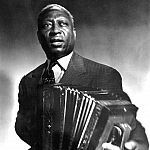
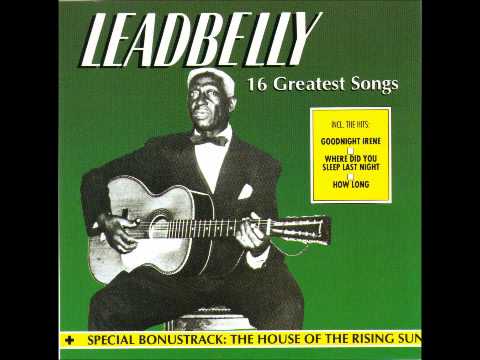
  • Leadbelly, whose real name was Huddie Ledbetter, developed the song while serving time on murder charges in Sugar Land, Texas from 1918-1925. He was pardoned by the governor after writing a song asking for his release.

    But in 1930, Leadbelly (Huddie Ledbetter) was once again jailed, this time in a state prison in Angola, Louisiana, convicted of attempted murder. In 1933, the anthropologist and music historian John Lomax came to Angola as part of a project for the Library of Congress: He was looking to record Black convicts to preserve their songs. The first several inmates he auditioned were unworthy, but Leadbelly had the goods. One of the songs that won Lomax over was "Goodnight Irene," which Leadbelly called "Irene."

    In 1934, Lomax made more recordings of Leadbelly at the prison, and later that year, he was released (Lomax claimed that once again, he earned a pardon from the governor, but there's no evidence of that). In 1935, Lomax made another recording of Leadbelly performing the song, this time entering it into the Library of Congress.

    "Goodnight Irene" became Leadbelly's signature; Lomax brought him north and showcased him as an authentic singing jailbird, reportedly making him wear striped clothes to simulate a prison uniform.

    Leadbelly had no interest in being promoted as a tamed savage, and parted ways with Lomax a few months later, going on to record hundreds of songs. He was a huge influence on many artists, but had a hard time shaking the image Lomax established for him. In 1937, he was featured in a Life magazine story called "Lead Belly - Bad Ni--er Makes Good Minstrel."

    He also didn't profit much from his efforts: Leadbelly was broke when he died in 1949.
  • Most recorded versions are much more tame than Leadbelly's original, with the line "I'll get you in my dreams" replaced with "I'll see you in my dreams."
  • In 1950, one year after Leadbelly died, "Goodnight Irene" was a #1 hit for the white folk group The Weavers. Other artists to record the song include Ry Cooder, Jerry Lee Lewis, Johnny Cash, The Chieftains, Tom Waits and Peter, Paul and Mary. >>
    Suggestion credit:
    Bertrand - Paris, France

Comments: 8

  • Darian from San Antonio, Txthe "sometimes i live in the country" lines are most definately in the leadbelly version, or at least the one i have.
  • Tristan from Philadelphia, PaThe saddest thing about this song, was that the line "I get you in my dreams" was later changed to "I'll see you in my dreams" and became a number one hit by the Weavers after Leadbelly died. Sadly there is a great number of people out there who have been robbed of the sullen true meaning of this song.
  • Bushrules from Houston, TxActually, the "Sometimes I live in the country..." line was in at least one of Leadbelly's versions. I am sure of this, as I just listened to it not 5 minutes ago :) It is, to me, the most poignant lyric in the song.

    Also, I it was Governor O.K Allen of LA who pardoned Leadbelly.
  • Jerry from Brooklyn, NyThe Weavers add another verse to this: "Sometimes I live in the country, sometimes I live in the town, sometimes I have a great notion, to jump into the river and drown".
  • Chris from Mansfield, Txi agree with Adrienne. actually Nirvana cover a few of leadbelly's song. in unplugged, they do "where did you sleep last night" and they did a few cover in the box set "with the lights out"
  • Peter from Toronto, Canada"Goodnight Irene" didn't get Leadbelly out of jail. It was his "Governor Neff" song, which he sang to Governor Pat Neff of Texas, about how he'd release the Governor if their positions were reversed. Although Governor Neff had sworn never to pardon a prisoner, was so overcome by the song that he released the murderous Leadbelly. Hence the legends of Leadbelly's dangerous charisma.
  • Adrienne from Santa Barbara, CaMy dad brought a Leadbelly album home from the library in 1963 and my mom and I thought he was nuts. Of course, with some living and heartache under my belt, I really appreciate Leadbelly. On a tv program about blues, they showed some photos and actually played a phono/tape of Leadbelly singing in jail in his stripes. I wish I could remember what the special was and what channel it was on. It was well worth the viewing for historical content as well as seeing and hearing this guy and how alot of his life was lived. All the old blues singers, followed by The Beatles, set the path for rock music of the 20th century.
  • Janelle from New York City, Nywow! so this song helped him get out of jail. amazing
see more comments

Editor's Picks

Christopher Cross

Christopher CrossSongwriter Interviews

The man who created Yacht Rock with "Sailing" wrote one of his biggest hits while on acid.

Director Mark Pellington ("Jeremy," "Best Of You")

Director Mark Pellington ("Jeremy," "Best Of You")Song Writing

Director Mark Pellington on Pearl Jam's "Jeremy," and music videos he made for U2, Jon Bon Jovi and Imagine Dragons.

Who Did It First?

Who Did It First?Music Quiz

Do you know who recorded the original versions of these ten hit songs?

Christmas Songs

Christmas SongsFact or Fiction

Rudolf, Bob Dylan and the Singing Dogs all show up in this Fact or Fiction for seasonal favorites.
Song Titles That Inspired Movies

Song Titles That Inspired MoviesSong Writing

Famous songs that lent their titles - and in some cases storylines - to movies.

Graham Bonnet (Alcatrazz, Rainbow)

Graham Bonnet (Alcatrazz, Rainbow)Songwriter Interviews

Yngwie Malmsteen and Steve Vai were two of Graham's co-writers for some '80s rock classics.