Lili Marleen

Album: Her Complete Decca Recordings (1944)
Play Video

Songfacts®:

  • This love song was first recorded in 1938, but its lyrics were written much earlier, in 1915, by Hans Leip, a young German soldier. His poem was originally entitled "Das Lied eines jungen Soldaten auf der Wacht" ("The Song of a Young Soldier on Watch") in which he recorded the pain felt by a soldier on being separated from his loved one.
  • Leip combined two girls' names for the female that he addresses. Lili was the young soldier's own girlfriend, the daughter of a local grocer. Marlene was a young nurse, who was a friend of his and also a comrade's sweetheart.
  • When Leip's work appeared in a collection of poems in 1937, composer Norbert Shultze set about turning it into a song. It was recorded by popular German singer Lale Andersen in 1939, but initially made very little impact. During the occupation of Yugoslavia, Radio Belgrade incorporated the tune into its broadcasts, for lack of other recordings and it became popular despite the opposition of Joseph Goebbels, the propaganda secretary of the Nazi party, who ordered broadcasting of the ballad to stop.
  • Radio Belgrade helped to spread its popularity among the soldiers of Allied armies too, who were listening in. A hurried English version was broadcast by the BBC for the Allied troops and eventually, both sides began broadcasting the song in both languages, interspersed with propaganda nuggets, intended to distract the enemy soldiers.
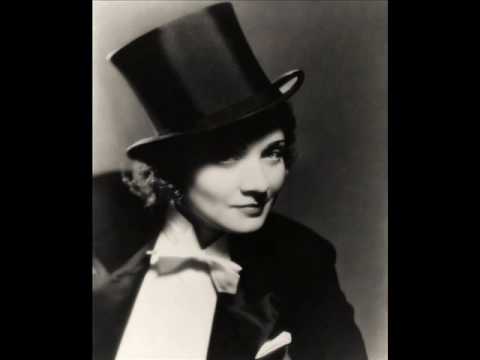
  • The German Hollywood actress and staunch anti-Nazi Marlene Dietrich recorded a version in her native language in 1944 that was designed to demoralize enemy soldiers. She became synonymous with the tune, performing it for American soldiers many times over the following years.
  • Despite the song's popularity with the German soldiers, Andersen was persecuted by the Nazi regime because of her relationship to a Jew, Ralf Liberman. She was not allowed to perform publicly for nine months, but was so popular, that the Nazi government eventually relented, though they still forbade her from singing "Lili Marleen." After the war ended in 1945, Andersen continued her career and had a number of other hits. She became rich from this song's royalties.
  • American singer Connie Francis released a version in 1962 as a single, which peaked at #9 in the German charts. Francis also recorded the song in Italian and French.
  • The song is also known as "Lili Marlene", "Lily Marlene" or "Lili Marlène."

Comments: 2

  • Bertus from The NetherlandsGreetings, ladies and gentlemen! I would like to know more details about the first recording of "Lili Marleen" in German by Marlene Dietrich. Specifically, I am interested in the location, date (as Wikipedia and other sources state 1945, but I believe it should be 1944), the recording studio, and any other relevant information. I appreciate your kindness and knowledge in advance. Thank you!
  • Pnutt1 from Leeds In William Manchesters book ' The Arms of Kruup' Hans Leip asked the author to make correct who the two women in the song were exactly, Hans said that they were both women he himself fell in love with before leaving for ww1 in 1915, not prostitutes or friends girlfriends.
see more comments

Editor's Picks

Thomas Dolby

Thomas DolbySongwriter Interviews

He wrote "She Blinded Me With Science" so he could direct a video about a home for deranged scientists.

Psychedelic Lyrics

Psychedelic LyricsMusic Quiz

Whoa man! Do you know which band came up with these cosmic lyrics?

Let Me Be Your Teddy Bear: Teddy Bears and Teddy Boys in Songs

Let Me Be Your Teddy Bear: Teddy Bears and Teddy Boys in SongsSong Writing

Elvis, Little Richard and Cheryl Cole have all sung about Teddy Bears, but there is also a terrifying Teddy song from 1932 and a touching trucker Teddy tune from 1976.
Which Songs are About Drugs?

Which Songs are About Drugs?Fact or Fiction

"25 or 6 to 4" to "Semi-Charmed Life" - see if you can spot the songs that are really about drugs.

Joan Armatrading

Joan ArmatradingSongwriter Interviews

The revered singer-songwriter talks inspiration and explains why she put a mahout in "Drop the Pilot."
Bass Player Scott Edwards

Bass Player Scott EdwardsSong Writing

Scott was Stevie Wonder's bass player before becoming a top session player. Hits he played on include "I Will Survive," "Being With You" and "Sara Smile."