Crackle And Drag

Album: Come Feel Me Tremble (2003)
Play Video

Songfacts®:

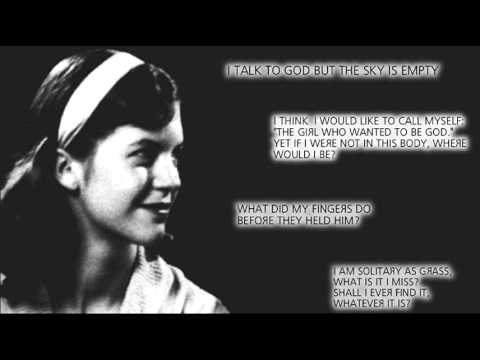
  • "Crackle And Drag" is about the suicide of poetess Sylvia Plath. The title is taken from the final line of her poem "Edge": "Her blacks crackle and drag."

    The "blacks" are stage curtains being drawn close.

    "Edge" is about a recently deceased woman, possibly Plath's future self. It might be the last poem she ever wrote. Uncertainties in her personal records make it unclear if the last was "Edge" or "Balloons," but historians lean towards "Edge."
  • And as her babies slept, she took a long deep breath
    Now they're zipping her up in a bag


    Plath committed suicide by sealing herself in her kitchen and running a gas oven as her children slept. Her nurse found her on February 11, 1963. She's still widely read and taught in university English classes.
  • In a 2003 interview with the Minneapolis/Saint Paul City Pages (Volume 24, Issue 1193), Westerberg explained that he read Plath's novel, The Bell Jar, and some of her collected journals and diaries. He was struck by the calculated way she killed herself.

    "Just the way she made the pillows so neat in the oven door," he said. In typical, grim Westerberg fashion, he added, "I always go back and forth: Would I have done that and saved the children, to see their dead mother? Or would I have killed the kids with me?"
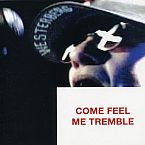
  • Westerberg included two versions of the song on Come Feel Me Tremble, his fifth solo studio album. The songs appear back-to-back, with the first being a faster rock version that harkens back to his days in The Replacements, and the second being slowed-down and acoustic. >>
    Suggestion credit:
    John - Levittown, NY
  • On July 1, 2002, before releasing Come Feel Me Tremble, Westerberg played "Crackle And Drag" at the Guthrie Theater in Minneapolis. He joked that he didn't include the song on his fourth studio album, Stereo, because it had "too many words." He fumbled through the beginning but then found his groove and delivered an emotional, evocative rendition.

Comments

Be the first to comment...

Editor's Picks

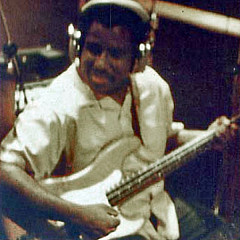
Bass Player Scott Edwards

Bass Player Scott EdwardsSong Writing

Scott was Stevie Wonder's bass player before becoming a top session player. Hits he played on include "I Will Survive," "Being With You" and "Sara Smile."

Protest Songs

Protest SongsMusic Quiz

How well do you know your protest songs (including the one that went to #1)?

The Fratellis

The FratellisSongwriter Interviews

Jon Fratelli talks about the band's third album, and the five-year break leading up to it.
Tom Johnston from The Doobie Brothers

Tom Johnston from The Doobie BrothersSongwriter Interviews

The Doobies guitarist and lead singer, Tom wrote the classics "Listen To The Music," "Long Train Runnin'" and "China Grove."
Gary Louris of The Jayhawks

Gary Louris of The JayhawksSongwriter Interviews

The Jayhawks' song "Big Star" has special meaning to Gary, who explains how longevity and inspiration have trumped adulation.
Danny Clinch: The Art of Rock Photography

Danny Clinch: The Art of Rock PhotographySong Writing

One of rock's top photographers talks about artistry in photography, raising funds for a documentary, and enjoying a County Fair with Tom Waits.