Originally recorded for Paul Simon's 1965 UK-only debut, The Paul Simon Songbook, the song title name-checked then-current US Secretary of Defense Robert McNamara. According to Simon, he was mostly channeling Lenny Bruce. He recalled years later:
"I was having fun. I thought it would be funny to use those unusual words 'desultory' and 'philippic,' in a song title, and I also wanted to sneak in some Lenny Bruce, who was my favorite comedian. That line, 'How I Was Robert McNamara'd Into Submission,' is pure Lenny."
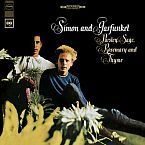
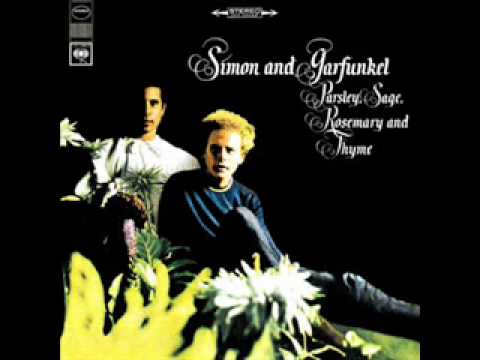
Paul Simon re-recorded the song in 1966 with his partner, Art Garfunkel, for the duo's third album Parsley, Sage, Rosemary and Thyme. That version features several changes to the lyrics.
Much has been made of this song being a dig at Bob Dylan. There's a story floating around about Dylan laughing at one of Simon's performances, sparking this response. That doesn't seem to be the case, though. Simon has explained that he used the song to explore Dylan's style. In an interview with
Rolling Stone, he said, "One of my deficiencies is my voice sounds sincere. I've tried to sound ironic. I don't. I can't. With Dylan, everything he sings has two meanings. He's telling you the truth and making fun at the same time."
Specifically, the song is expected to be a play on "
Subterranean Homesick Blues," which Dylan released the year Simon recorded the song.
In the intro to the first version of the song, Simon subtitles it as, "Or how I was Lyndon Johnson'd into Submission," referring to Lyndon Johnson, 36th President of the United States (and the man most suspected to be behind the John F. Kennedy assassination plot, if a wide-ranging plot did indeed exist at all).
To be "desultory" is to lack plans, purpose, and enthusiasm. A "philippic" is a bitter verbal attack. It's derived from a speech Demosthenes delivered in opposition to the military ambitions of Philip II, King of Macedon, in 351 BC.
I been Norman Mailered, Maxwell Taylored
Norman Mailer was one of the most prominent authors and journalists of the 1960s. He won two Pulitzers and an array of other honors. Mailer identified himself as a "left-conservative," which may explain his inclusion among the military figures and anti-communists that make up the characters involved in this song.
Maxwell Taylor was a US Army officer who fought in the legendary Screaming Eagles 101st Airborne Division in World War II. He was one of the primary figures responsible for getting America into the Vietnam War (along with the McNamara in the song's title). The Vietnam War was a central cultural and political concern of the 1960s counterculture.
I been John O'Hara'd, McNamara'd
John O'Hara was an American best-selling novelist and short story writer. He was known for his accurate representations of dialogue and working-class life. His inclusion in the song may be due to his widely known conservative views.
Robert McNamara was the eighth United States Secretary of Defense and one of the men most responsible for America's involvement in the Vietnam War. He was essentially Public Enemy #1 for the anti-war hippies of the 1960s.
I been Rolling Stoned and Beatled till I'm blind
The Rolling Stones and the Beatles were two of popular music's legendary acts. You may have heard of them.
Their inclusion here may be purely comic, as they seem out of place among the rest of the song's characters. It's possible Simon was pointing a finger at their "sellout" levels of success, but that's a guess based purely on the context of the remainder of the song. In 1966 when "A Simple Desultory Philippic (Or How I Was Robert McNamara'd Into Submission)" was released, the Stones and Beatles were leading voices of their generation, so it's best to not take Simon's lyric too seriously.
I been Ayn Randed, nearly branded communist
'Cause I'm left-handed
Any Rand was a Russian-born American novelist and creator of the philosophical system of Objectivism. While working as a Hollywood writer in the 1940s, she was a member of some anti-Communist groups. She remains a controversial figure as a defender of individual liberty and an expressed champion of capitalism, two things that ran counter to the Leftist political positions of the '60s counterculture (and to much of the modern zeitgeist, for that matter).
The "left-handedness" line alludes to the Second Red Scare, of which Rand played a tangential part. It was a time of political witch hunt when people were often fingered as Soviet Communist sympathizers for some rather unconvincing reasons.
I been Phil Spectored, resurrected
Phil Spector is one of the most successful and influential record producers in history. In 2009 he was sentenced to 19 years to life for the murder of actress Lana Clarkson.
I been Lou Adlered, Barry SadleredLou Adler is co-owner of the Roxy Theatre in West Hollywood, a film and record producer, and a Rock & Roll Hall of Fame inductee. He produced Cheech & Chong films and albums and was executive producer for
The Rocky Horror Picture Show, perhaps history's "most cultish" cult film.
Barry Sadler wrote and performed the 1966 hit, "
Ballad Of The Green Berets." He was a Green Beret in the Vietnam War.
Well, I paid all the dues I want to pay
Musicians use the term "paying dues" to mean working one's way up the ladder by performing in small venues and on the street. It's a way of saying that you've endured the hardest challenges and earned your position at the top.
And I learned the truth from Lenny BruceLenny Bruce was the archetypal underground comedian. His inflammatory acts touched upon things in American culture that no one else would talk about publicly. He challenged limitations of free speech and got into legal troubles throughout his career. He was a leading thinker of his generation and has appeared in many other songs, including Dylan's "
Lenny Bruce." Dylan didn't release that song until 1981, so it can't be a direct reference in this song.
So I smoke a pint of tea a day
"Tea" was common slang for marijuana in the '50s and '60s.
I knew a man, his brain was so small
He couldn't think of nothing at all
Not the same as you and me
He doesn't dig poetry
He's so unhip, when you say Dylan
He thinks you're talkin' about Dylan Thomas
This is alluding to Bob Dylan.
Dylan Thomas was a Welsh poet that lived from 1914 to 1953. His unique use of the English language made him one of the most influential poets in history.
I been Mick Jaggered, been silver daggered
Jagger is frontman for the Rolling Stones, who were previously mentioned in the song.
Andy Warhol, won't you please come home?
Andy Warhol was a major artist of the 1960s and one that heavily influenced pop culture. He was also the patron that gave the Velvet Underground life in their early days.
Been Roy Haleed and Art GarfunkeledRoy Halee produced and engineered several Simon & Garfunkel works, including
Parsley, Sage, Rosemary and Thyme, the duo's third studio album and the one on which this song appears. He is also the guy who can be heard saying, "So long already, Artie!" at the end of "
So Long, Frank Lloyd Wright."
I just discovered somebody's tapped my phoneSome hold that this line refers to the "phone's tapped, anyway" line in "
Subterranean Homesick Blues," but it may also allude to "
Talkin' John Birch Paranoid Blues," which doesn't mention a tapped phone but does mention several paranoid delusions and seems aligned with this song.
(Folk rock)
(I've lost my harmonica, Albert)
The simple "folk rock" declaration mimics a device early Dylan used in comic talking-blues songs. He'd make short statements that came across funny in their absurdity.
The "Albert" mention is almost certainly Albert Grossman, Dylan's first manager, who was instrumental in launching Dylan.