The Lord's Prayer

Album: With You I Am (1974)
Charted: 4
Play Video

Songfacts®:

  • In 1974, a Roman Catholic nun in Australia had a Top 10 multinational hit with a disco-pop song in which she sings the Lord's Prayer. Now that we have your attention, let's repeat that so you're sure you read it right: In 1974, a Roman Catholic nun in Australia had a Top 10 multinational hit with a disco-pop song in which she sings the Lord's Prayer. It's the kind of song story that makes us love our job here at Songfacts.

    Oh, and she's not the first nun on the Billboard chart; that honor goes to Sister Luc-Gabrielle, 1963, who hit #1 on the Hot 100 with "Dominique."

    Sister Janet Mead intertwined a music career with her church work, forming a rock band which performed a series of "rock masses" that she conducted at Adelaide Cathedral. She went pro about 1973, going to Sydney to record on a Festival Records contract. "The Lord's Prayer" was the idea of her producer, Martin Erdman. The single became the first Australian recording to sell over one million copies in the US. (Suck it, AC/DC!)
  • Sister Janet went on to fame, fortune (all donated to charity, of course), and awards (including a Yamaha Golden Gospel Award and a Grammy nomination). However, she was a nun, after all, and was quite media-shy and conflicted about her success. In interviews, she later described her fifteen minutes as "a horrible time." Only in the 2000s did she return to her love of music, but trying to do so in a more low-key fashion.
  • Bible-study section: Scriptural scholars will note the irony of the success of this song. You see, the Lord's Prayer, in the King James Bible, occurs at Matthew 6, verse 9-13. If you read through the entire chapter, Jesus was offering this as an example of how to pray, in the middle of a lecture about how one should not be public, open, and prideful in their worship, but to keep it between yourself and God. In this lecture, Jesus scorns those who wear their reverence on their sleeve, seeking the favor of the public: "Do not sound a trumpet before thee, as the hypocrites do in the synagogues and the streets," "Thou shalt not be as the hypocrites are; for they love to pray standing in the synagogues and in the corners of the streets, that they may be seen of men," and even "when ye fast, be not, as the hypocrites, of a sad countenance: for they disfigure their faces, that they may appear unto men to fast." And so on. So then, the example prayer becomes a hit Billboard single and wins awards and is heard all around the world.

Comments

Be the first to comment...

Editor's Picks

Steely Dan

Steely DanFact or Fiction

Did they really trade their guitarist to The Doobie Brothers? Are they named after something naughty? And what's up with the band name?
David Bowie Leads the Society for Prevention of Cruelty to Long-Haired Men

David Bowie Leads the Society for Prevention of Cruelty to Long-Haired MenSong Writing

Bowie's "activist" days of 1964 led to Ziggy Stardust.
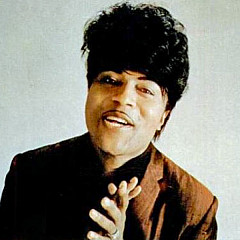
Little Richard

Little RichardFact or Fiction

Was Long Tall Sally a cross-dresser? Did he really set his piano on fire? See if you know the real stories about one of rock's greatest innovators.
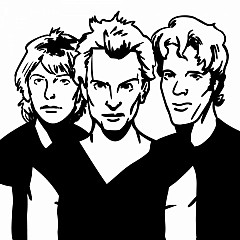
The Police

The PoliceFact or Fiction

Do their first three albums have French titles? Is "De Do Do Do, De Da Da Da" really meaningless? See if you can tell in this Fact or Fiction.

Chris Tomlin

Chris TomlinSongwriter Interviews

The king of Christian worship music explains talks about writing songs for troubled times.
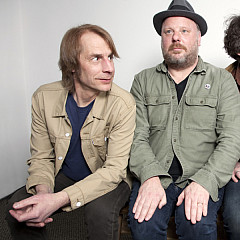
Mark Arm of Mudhoney

Mark Arm of MudhoneySongwriter Interviews

When he was asked to write a song for the Singles soundtrack, Mark thought the Seattle grunge scene was already overblown, so that's what he wrote about.