Fingertips (Part 2)

Album: The 12 Year Old Genius (Recorded Live) (1963)
Charted: 1
Play Video

Songfacts®:

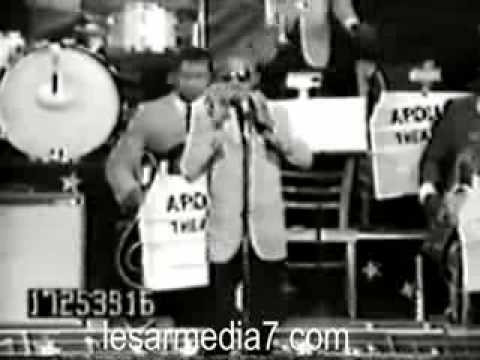
  • "Fingertips (Part 2)" was the first live recording to hit #1 in the US, and it made Stevie Wonder the youngest artist ever to top the chart. The song has quite a story behind it. Wonder, just 12 years old, was part of a Motown package tour called "The Motortown Revue," and was thrilling crowds with his high-energy performances. On March 10, 1963, the Revue came to the Regal Theatre in Chicago, where Wonder's performance was recorded. On this night, he played a highly improvised version of his song "Fingertips," which went on for about 10 minutes as the crowd went absolutely nuts and the stage manager, concerned because the show was running late, tried to get him off so the next act could perform. Wonder fed off the crowd and kept going, even doing a little bit of "Mary Had a Little Lamb" on his harmonica. When Wonder ends the song (about 2:05 in), the band starts to clear the stage, and the band for the next act, The Marvelettes, hustles on. At this point, Wonder starts playing again, at which point you can hear the Marvelettes bass player Joe Swift ask "What key?" and the performance picks up again with a little encore played by at least some members of the new band.

    Motown released the last three minutes of this performance as "Fingertips (Part 2)," as the B-side of a different performance of the first part of "Fingertips." Part 2 became the hit, and the single was quickly reissued with Part 2 as the A-side. The song went to #1 on August 10, 1963, when Wonder was 13. It spent three weeks at the top and launched him to stardom.
  • An instrumental studio version of "Fingertips" was included on Wonder's first album, The Jazz Soul Of Little Stevie, in September 1962. The song was written by the Motown writers Hank Cosby and Clarence Paul. This version of the song is much more mellow, jazzier and flute-heavy than the famous live version, which plays up the horns and harmonica.
  • Wonder's first two albums were The Jazz Soul of Little Stevie and Tribute to Uncle Ray, both released in 1962 and intended to frame Stevie as a young Ray Charles. They didn't catch on, but in 1963 Motown released The 12 Year Old Genius (Recorded Live), with two sides of the "Fingertips" single (from different performances) edited together to make one song. The album hit #1 while the single was still topping the Hot 100, making Stevie Wonder the first artist with a #1 album and single at the same time. The song was also a #1 R&B hit at the time.
  • The words on this song were stuff Stevie Wonder came up with to engage the crowd - Part 1 of the song and the studio version are both instrumental.
  • This was only the second #1 hit for Motown Records. Their first was "Please Mr. Postman" by The Marvelettes in 1961.
  • A young Marvin Gaye played drums on this live recording. Gaye had already been a Motown session drummer for a couple of years, and amongst the hits he'd previously drummed on was The Marvelletes #1 song "Please Mr. Postman."
  • Berry Gordy gave Wonder the name "Little Stevie Wonder" (his real name is Steveland Morris) and marketed him with Motown Records as a "Genius." His talent was obvious, but it didn't translate to record, and his first three singles tanked. It took a while for Wonder to develop a studio hit, but he quickly became a top live performer, thanks in part to his time in the youth choir at Whitestone Baptist Church in Detroit. "Fingertips (Part 2)" captured that live energy and established Wonder as a top vocalist and harmonica player, but as he grew up, he developed into a brilliant songwriter, producer and multi-instrumentalist. He dropped the "little" from his stage name in 1964.
  • Wonder got a lot of attention in the aftermath of this song, but he went though a long dry spell before he had another big hit. By 1965, Motown producers were passing up opportunities to work with him because they couldn't figure out how to translate his talent into a hit recording. The breakthrough came when he began working with Sylvia Moy, who worked with him on the song "Uptight (Everything's Alright)," which made #3 in 1966.

Comments: 13

  • Chuck from Atlantic City NjMany say it was Marvin Gaye on drums however many researchers say it was Richard "Pistol" Allen.
  • Wally from Miami, FloridaWhen Fingertips hit the AM radio R&R stations, I recall Stevie saying "key of G, key of G" in the recording. I found that very odd and have remembered it since, because musicians obviously should know the key of a song before the recording it. To me it was more evidence of Stevie's genius. When I listen to Fingertips now, I don't hear Stevie saying that. Was it another song? Is my recollection wrong?
  • Steve from Sydney, AustraliaBeing on Tamla Motown label this was an import so I had to wait and when it finally arrived (on 45rpm record) it was labeled back the front with part 1 actually part 2. Always wondered if this was deliberate as the articles I have read suggest that part2 was the hit so maybe this was the intention.
  • Barry from Sauquoit, NyOn July 8th 1963, Stevie Wonder performed "Fingertips (Part 2)" on the ABC-TV program 'American Bandstand'...
    One moth earlier on June 16th, 1963 it entered Billboard's Hot Top 100 chart at position #85; and on August 4th, 1963 it peaked at #1 (for 3 weeks) and spent 15 weeks on the Top 100 (and for 7 of those 15 weeks is was on the Top 10)...
    And on July 28th, 1963 it also reached #1 (for 6 weeks) on Billboard's Hot R&B singles chart...
    The three weeks it was at #1 on the Top 100 it prevented three different records was reaching #1; "Wipe Out" by the Surfaris, "Blowin' in the Wind" by Peter, Paul and Mary, and "Hello Muddah, Hello Fadduh (A Letter From Camp)" by Allan Sherman (all three peaked at #2)...
    Mr. Wonder, born Stevland Hardaway Judkins, celebrated his 64th birthday two months ago on May 13th, 2014.
  • Bill from Ocean View, Njthe bass player larry moses yelled what key what key,not joe swift.wonder left the stage,and came back for an encore.by the way,the key is C MINOR.THIS WAS NOT a telvised show.
  • Bill from Ocean View, Njthis was recorded live in june of 1962
  • Bill from Ocean View, Njthe bass player larry moses yelled what key what key,not joe swift.wonder left the stage,and came back for an encore.by the way,the key is C MINOR.THIS WAS NOT a telvised show.
  • Stefanie from Rock Hill, ScMarty. Both halves of "Fingertips" are on Stevie Wonder's At the Close of a Century boxed set.
  • Lester from New York City, NyI always thought the MC was surprised that Stevie continued to play, and he said, "What's this Stevie, what's this?". At least that's how I interpreted it.
  • Marty from League City, TxI had a 45 with both halves of Fingertips on it and I would pay ANYTHING to get both halves again. Do you think they will ever re-release it? To me, they are both incomplete without the other half.
  • Eric from Los Angeles, CaComment above "Wonder kept singing when the song was supposed to end,..." I believe is incorrect.

    To me, it sounds like the performance was televised live. Stevie's only way to queue the band that his "jam" was complete was to play "Mary Had A Little Lamb". The band strikes up closing chords, etc and the MC of the show begs the audience to give Stevie a hand. At this point, what I believe happened, is that Stevie continued to "jam" during what seems to be a TV commercial break. If you notice, that last part ("what key") is a little less than 60secs. When that happens, the MC goes on mike to shut the song down.. as if, getting ready to come back from the TV spot. Thats MY interpretation :-) (Eric CD Thomas, LA)
  • Les Knoll from Chicago, IlFingertips Part I contains one of the all time best brass ensemble riffs I have ever heard! For theory nuts, it's based on the circle of 5ths, alternating between m7 + 4th and 7th + flatted 5th. I play keys, and jam on that progression 'till my fingers bleed. You would not believe how good these passages sound on a large theater pipe organ! Clarance Paul had a KILLER arrangement there, too bad portions of Part 1 never made it into the pop mainstream.
  • Jeff from Boston, MaThe reason you could hear the bass player yelling "What key Stevie - what key?" is because in the live version recorded during Stevie's set at Chicago's Regal Theatre, this was the last song, and when his conductor Clarence Paul called him back out onto the stage, Mary Wells' conductor and bass player Joe Swift had already taken the stage to set up for Mary's set, and when Stevie began to play again, Joe yelled "What Key?"
see more comments

Editor's Picks

American Hits With Foreign Titles

American Hits With Foreign TitlesSong Writing

What are the biggest US hits with French, Spanish (not "Rico Suave"), Italian, Scottish, Greek, and Japanese titles?

Yacht Rock!

Yacht Rock!Song Writing

A scholarly analysis of yacht rock favorites ("Steal Away," "Baker Street"...) with a member of the leading YR cover band.
Glen Phillips of Toad the Wet Sprocket

Glen Phillips of Toad the Wet SprocketSongwriter Interviews

The "All I Want" singer went through a long depression, playing some shows when he didn't want to be alive.

Paul Williams

Paul WilliamsSongwriter Interviews

He's a singer and an actor, but as a songwriter Paul helped make Kermit a cultured frog, turned a bank commercial into a huge hit and made love both "exciting and new" and "soft as an easy chair."
Christopher Cross

Christopher CrossSongwriter Interviews

The man who created Yacht Rock with "Sailing" wrote one of his biggest hits while on acid.
George Harrison

George HarrisonFact or Fiction

Did Eric Clapton really steal George's wife? What's the George Harrison-Monty Python connection? Set the record straight with our Fact or Fiction quiz.