This was originally recorded by the duo Johnny & Jackey (Johnny Bristol and Jackey Beavers) in 1961. Their version went nowhere, and the duo were defunct a short time later.
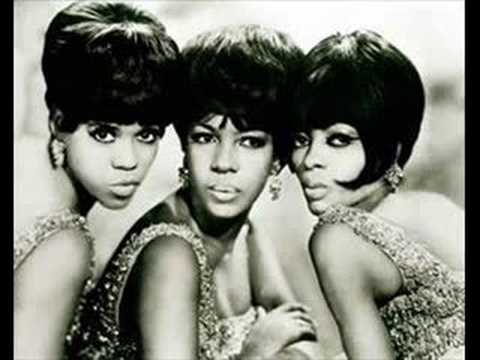
The song was revived in 1969 when Motown Records brought in Bristol to produce a new version for Jr. Walker & the All-Stars as a follow-up to their hit "What Does It Take (To Win Your Love)." Bristol recorded the track with Motown's famed Funk Brothers house band and added backing vocals using singers at the label, along with the sisters Maxine and Julia Waters. But Walker never got to record it. The Supremes were about to break up, and Motown needed a big hit to launch Diana Ross' solo career. Increasingly desperate, label head Berry Gordy decided to give "Someday We'll Be Together" to Ross instead of Walker. She added her lead vocal to the track, but Gordy decided it was better suited as the final Supremes single with Ross instead of her debut. The Supremes needed a big finale to close out their Diana Ross era, move forward as a group, and send off Ross as a solo artist, and that's exactly what the song did, even though Ross was the only group member to appear on it.
Released on October 14, 1969, "Someday We'll Be Together" quickly rose up the charts. Ross announced she was leaving The Supremes in November, and on December 27, it hit #1 on the Hot 100, giving the group one last chart-topper, bringing their total to 12.
Jackey Beavers and Johnny Bristol wrote this song while they were touring in the Midwest. Most of it was written while they were driving from gig to gig. Harvey Fuqua, who was their label boss at Tri-Phi Records, also is credited as a writer. Fuqua was married to Berry Gordy's sister, Gwen, and later joined Berry's company, Motown Records, where he worked when this song was issued by The Supremes.
Johnny Bristol, who produced the track, struggled to get the sound he wanted from Ross, so he went into a different vocal booth to augment her, shouting encouragement while she was recording. These exhortations made it onto the final product: That's him coaching Diana through the song, offering "sing it pretty" and "you better" along the way.
In the original Johnny & Jackey version, the song is about a guy predicting that he and his girl are destined to be together even though he let her go. The Supremes version could be heard as an affirmation that the group will always be together in spirit, even after the departure of Diana Ross. The group didn't share this sentiment, as Ross was at odds with her bandmates, Mary Wilson and Cindy Birdsong.
This song served as Diana Ross' send-off from The Supremes. They performed it last at their final concert: a midnight show at the Frontier Hotel and Casino in Las Vegas on January 14, 1970 (technically January 15 once the clock struck midnight). Motown royalty like Marvin Gaye and Smokey Robinson were in the crowd, along with celebrities like Johnny Carson and Dick Clark. The night was dedicated to Ross and orchestrated to launch her solo career. The Supremes soldiered on with various lineups until 1977, but never returned to their past glory; Ross became one of the biggest stars of the '70s, landing a #1 with her second single, "
Ain't No Mountain High Enough."
The Frontier show was recorded and released as a live double album called
Farewell, with some tracks taken from previous shows during their run.
Diana Ross performed with The Supremes just once after her departure, singing this song with Wilson and Birdsong at the Motown 25: Yesterday, Today, Forever special, fulfilling the prophesy in the lyric. The show ended with the Motown acts that performed earlier - The Temptations, Smokey Robinson and Michael Jackson among them - taking the stage and singing along.
The show drew a huge audience and revived interest in The Supremes. A reunion was planned, but scrapped when Wilson refused to accept far less than what Ross was slated.
Up to the Motown 25 reunion, the last televised Supremes performance with Ross took place on December 21, 1969 when they performed this song on the Ed Sullivan Show. It was the 20th time they appeared on the show.
This song has one of the most prominent string sections of any Motown track. That part was overdubbed after the basic track was recorded in a session where 11 guys played together.
The guitarist on this session was Dennis Coffey, who later had his own hit with "
Scorpio." Speaking with Songfacts,
Coffey said: "On that song, I'm doing the vibrato sound with the guitar and then I switch to backbeats later on. They had good arrangers at Motown, like Paul Riser or David Van DePitte. So, when you go into the studio, there's usually the arranger and the producer. We would have the charts in front of us, so we would have to read the chart correctly first and then they kind of massaged it based upon us playing licks for them that they liked and stuff like that."
This was used in episodes of the TV series The Wonder Years ("Just Between Me and You and Kirk and Paul and Carla and Becky" - 1989), Quantum Leap ("The Leap Home: Part 2" - 1990) and Murphy Brown ("Bump in the Night" - 1993).
On the R&B chart, this went to #1 for four weeks, their seventh to hit the top on that tally. The group did land one more #1 R&B hit, the Ross-less "
Stoned Love."
Janet Jackson sampled this on her 1993 hit single "
If."
Bruce Springsteen covered the song for his 2022 album, Only the Strong Survive. The record comprises his interpretations of 13 classic R&B and soul songs.