Fire in the mountains, flames upon the heath
and the president spits out the news
He's biting on wooden teeth
Read full Lyrics
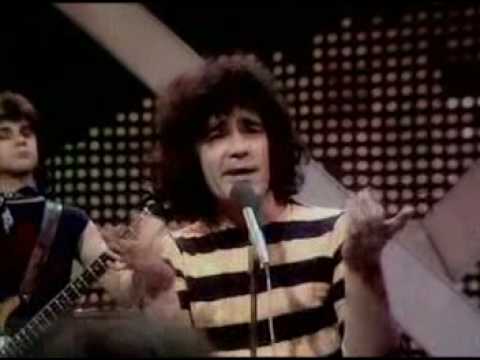
No one's really sure what Alex Harvey was doing with "Boston Tea Party." He died of a heart attack in 1982, so we'll likely never know. That's fine, though, because the song's ambiguity perfectly fits Harvey's modus operandi. He was always a wild man and an experimenter.
At the simplest level, "Boston Tea Party" is obviously about the historical event of that name, but Harvey does some stuff that takes it to a subtly surreal (or at least subtly weird) place. It's interesting that he decided to do a song on that subject at all, really, because Harvey wasn't American. He was Scottish, born and raised in Glasgow, the nation's most populated city.
The song's first verse deals with the Boston Tea Party with clear-cut historical accuracy.
Are you going to the party?
Are you going to the Boston Tea Party?
Redcoats in the village
There's fighting in the streets
The Indians and the mountain men, well
They are talking when they meet
The king has said he's gonna put a tax on tea
And that's the reason you all Americans drink coffeeThe Boston Tea Party occurred on December 16, 1773, in Boston Harbor, Boston, Massachusetts. It was one of the key inciting incidents of the American Revolutionary War, in which the United States executed the world's ultimate underdog victory by defeating England and driving them off the continent.
The United States at the time was a British colony. It may have remained that way if not for the immensely unpopular Tea Act of May 10, 1773. Resistance to the Tea Act was so great that one evening a group of 30–130 men stormed three British ships anchored in Boston Harbor and dumped their entire cargo of tea into the water. In all, 342 chests of tea were disposed of. The event was the final spark to the powder keg that had being filled between the colonists and the British. The American Revolutionary War followed and eventually reshaped the entire world.
Because the Tea Party was related to taxes, many mistakenly believed that the resistance was over the high cost of tea. That wasn't the case. The way the taxation scheme worked, the price of British tea actually went down. There were multiple other issues that sparked confrontation, all of them basically amounting to colonial resistance to Britain's ability to meddle in North American affairs and business.
The popular rallying cry was "no taxation without representation." The meaning of that idea was that it was unjust of England to tax the American colonists while those colonists had no representatives in the English political system. America was a colony, which meant it had to endure British rule while having little to no power to affect that rule from within the legal system.
So, without that political voice, the Americans took to raiding ships and destroying the modern equivalent of $1.7 million worth of tea. After that, they took on the most feared military in the world, and they won.
 "Tea sabotage in Boston Port" by Nathayel Corrier
Harvey seems to be having fun with the magnitude of the American Revolution when he sings, "And that's the reason you all Americans drink coffee." The apparent absurdity of the line is what lends it humor, but it is actually a true statement.
Because of the Tea Party and the Tea Act, Americans considered tea drinking to be unpatriotic. They shifted to coffee. This wartime norm extended beyond the Revolution and became simply the standard of the United States.
As silly as it sounds, the Boston Tea Party and Revolutionary War actually are the reasons that modern Americans drink coffee much more than they drink tea.
The "redcoats in the village" in the first verse refer to British soldiers, whose uniform was a red coat.
The song's second verse continues with some of the historicity of the first, but here it begins to mutate.
Fire in the mountains, flames upon the heath
And the president spits out the news
He's biting on wooden teeth
The children of the colonies
Got a different tale to tell
I'm going down to the city
Tell my folks I'm doing well"Wooden teeth" refers to General George Washington, first president of the United States (1789–1797), whom it was long held his teeth were so bad they had to be replaced with wooden dentures. This, however, was discredited and it was more recently discovered his dentures were made from a mix of lead, ivory, gold, and actual human teeth.
Other than that, however, the verse is a bit off-kilter. Why do the children of the colonies have a different tale to tell? Is Harvey referring to the actual children born in the colonies in 1773 or to those of his own era? Is he meaning "children" in a metaphorical sense? It appears he left that part up to the listener.
What we do know is that the third verse is where things get truly wonky.
Bringing back the buffalo to the long prairie
Bringing back the fishes swimming in the sea
The children of the colonies
Got a different tale to tell
I'm going down to the city
Tell my folks I'm doing wellAt the time of the Boston Tea party, the buffalo were still very much in the American Midwest (they were much later decimated by over-hunting). There never seemed to be any particular lack of fish in the sea, though over-fishing has hurt populations. So it seems as if Harvey has transitioned to modernity in the third verse in order to make a statement about environmentalism and the cultural revolution of the '60s and '70s, which was mostly anti-capitalist.
That might all be reading too much into the song; again, it's left to the listener to decide whether it has real meaning or whether Harvey was simply fun.
Whatever the case, "Boston Tea Party" was one of biggest hits by The Sensational Alex Harvey Band, along with their cover of Tom Jones' "
Delilah."
It's a fittingly quirky song to represent a quirky band. Whatever it ultimately means, the song has stood the test of time.
-Jeff Suwak
April 15, 2025
Boston Tea Party Songfacts
Browse all Songplaces
Comments: 1

 "Tea sabotage in Boston Port" by Nathayel Corrier